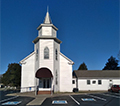
Mt. Zion Baptist Church 160th Church Anniversary
Church History (1866 – 2026)
A Message from Our Ancestors
Before we were Mt. Zion Baptist Church, we were enslaved members of Farnham Baptist Church in Richmond County, Virginia. From the time of its founding in 1776, Farnham Baptist Church was divided into two parts. The lower level of the church house was designated for white congregants and Black members were restricted to the galleries to worship.
In 1829, Lee Wright, who was enslaved to Elder Thomas Braxton, was licensed to preach to the “colored” people under specified circumstances.
We were persistent. We learned to read and write and began to study God’s word. We embraced the teachings of Jesus Christ. Our acts demonstrated our faith. During the years of the American Civil War, 1861-1865, most new members baptized at Farnham Baptist Church were black.
When emancipation came in 1863, we were determined to live free. Be inspired by the church founders’ story. Let all who cross your path know about the 26 Black professed Christians of Farnham Baptist Church who in 1866, shortly after the end of the American Civil War and the end of slavery in this country, petitioned for spiritual independence.
Their request to withdraw from Farnham Baptist Church to form a church of and for their own race was approved. With guidance from the Pastor of Farnham Baptist Church who helped to prepare the church covenant and articles of faith, the journey began.
Mt. Zion Baptist Church, our church, your church, was established.
When the founders established Mt. Zion Baptist Church in 1866, the 26 founders did not have a physical structure to call their church home. Worship services, including Sundy School, were held in a nearby home.
Shepherds with Vision
The founders of Mt. Zion immediately went to work to give the church structure and its own identity and purpose.
Shepherds with Vision
The founders of Mt. Zion immediately went to work to give the church structure and its own identity and purpose.
Rev. Peter Blackwell
Rev. Peter Blackwell of Heathsville, Virginia became the first pastor of Mt. Zion Baptist Church.
During Rev. Blackwell’s shepherdship, Sunday School continued to grow. The main objective of Sunday School was to teach adults and children to read. The goal was to enable them to read and understand the Bible. Everyone was expected to learn Rev. Blackwell’s catechism.
Blessed by the glory of prayer, the move from the private home to ownership of a church structure was fulfilled in three years.
On April 4,1869, the corner stone was laid for a building in Ivanhoe, Virginia, now known as Downings, Virginia. This building was the first official physical structure of Mt. Zion Baptist Church.
Rev. Blackwell’s pastorship of Mt. Zion continued until 1883.
Rev. Jacob Robinson
Mt. Zion was not without a pastor for long. The second shepherd, Rev. Jacob Robinson, began his pastorship in 1884.
Growth is the defining word of the Robinson administration--Growth in membership, growth in finances, and growth in service.
When the doors opened 1869, Mt. Zion was used as a house of worship and rented out as a Public school house. The rental continued to 1890.
Over time, it became increasingly apparent that Mt. Zion was outgrowing the original structure. During summer revivals, temporary brush harbors were constructed to accommodate the growing number of members.
Plans to build a new church were initiated in 1887. The original church structure was raised so the new church could be placed on the same site.
• New pine shingles were used.
• Nails were brought in from Baltimore
To ensure that the doors to the new church would open within three years, the Mt. Zion summer revival was canceled.
The cornerstone of the original Mt. Zion Baptist Church was laid in the new church, on October 25, 1890. This historic edifice, built, in part, by loving hands of members of the church, remains the place of worship for Mt. Zion and the surrounding community into the second decade of the 21st century.
During the construction of the new church, new auxiliaries were approved. Chief among them was The Women’s Club, which transitioned into the Missionary Club.
The first objective of this auxiliary was to raise finances for the building program. With additional funds, in 1894, new pews were purchased for the church.
Expansion did not stop when the construction of the new church was completed. Mt. Zion purchased land adjacent to the church and built a hall on it. The hall served as a rental venue for secular entertainment and events. To guarantee clarity of purpose, the new church was dedicated solely to religious services.
Leadership In a New Century
In the first half of the 20th Century, Mt. Zion welcomed a series of pastors. Each pastor’s service was anchored in building on the past. Collectively, they left benchmarks for future pastors to use as guideposts for their service.
Rev. H.V. Washington
Rev. H.V. Washington began his pastorate in 1903. Membership increased rapidly during his administration. This period is remembered for its stirring revivals and large number of baptisms.
The addition of a pulpit room, and the crafting plans to purchase more land were evidence of Mt. Zion’s material growth.
Rev. Washington served the church until his death in 1915.
Rev. L.C. Newman
Relatively, Pastor Washington’s successor, Rev. L.C. Newman, had a seven-year tenure from 1915 to 1922. But his achievements were significant. Heading the list is the Mt. Zion Cemetery. The land on which the cemetery sits to this day, was purchased during the Newman pastorate.
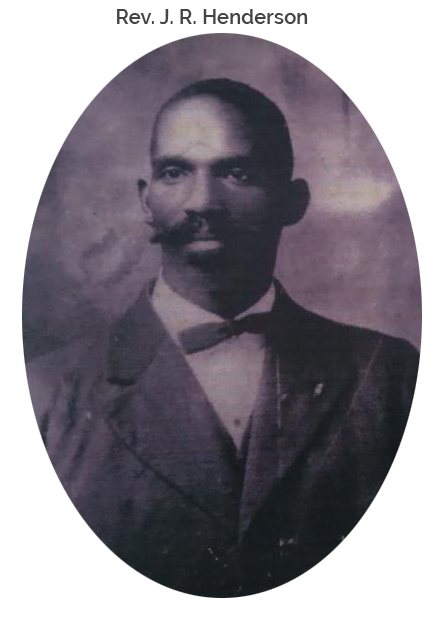
Rev. James Randolph Henderson
Mt. Zion’s fifth pastor was Rev. James Randolph Henderson. His administration, which ended with his death in 1940, more than doubled his predecessor’s.
Pastor Henderson was committed to moving Mt. Zion into an evolving society. Remolding the front of the church was just the beginning. The phrase “Let there be light” was no longer figurative. Electrical lighting was installed in the church.
As the Church Sunday School membership rapidly increased, it gained the rating of a standard Sunday School. Pastor Henderson’s example in promptness to and service in Sunday School was a model for church members to follow.
Many of Pastor Henderson’s descendants remain as faithful members of Mt. Zion today!
Rev. Benjamin F. Bunn
Rev. Benjamin F. Bunn was called to Mt. Zion in 1941. His leadership spanned the first half of the century’s fourth decade.
The Bunn administration was considered a period of reorganization. Much was achieved to strengthen the services of Mt. Zion.
- The choir was organized and enlarged.
- A junior choir was started.
- Plans for a building program were developed.
- The financial strength of the church increased.
- Printed leaflets of the order of service were used for this time.
Rev. Allix B. James
Rev. Allix B. James stepped into the role of Mt. Zion Pastor in 1945, and he served until 1957. His administration merged many of the intents of the previous pastors.
His resolute focus, coupled with the congregants’ unwavering commitment, took Mt. Zion to new heights.
- The building program was carried forward to its completion.
- The services of the church were extended.
- On January 14, 1945, the initial issue of the church publication, The Mount Zion Outlook was presented to the church. This newsletter kept members and friends informed and up to date about the church's happenings.
- Yearly Financial Reports was introduced.
- Improvements to the church included the installation of a centralized heating system, the addition of more rooms, the purchase of an electric organ, and general improvement to the auditorium.
Dr. James is also distinguished in the broader Baptist History, serving as a distinguished Professor, Dean, and ultimately, President of the illustrious Virgina Union University in Richmond, VA.
Rev. Lawrence B. Samuel
In 1957, Rev. Lawrence B. Samuel answered the call to pastor Mt. Zion. He and the members continued the completion of other improvement projects. The water supply to the church was made available and the church grounds paved.
In 1959, Mt. Zion purchased land to build the church parsonage and acquired the Sharps Number V School.
In 1966, Mt. Zion’s centennial year, the church met a longstanding need and made improvements to the interior and exterior of the church.
Rev. Samuel served until 1969.
Rev. Ivey Buie
As pastor from 1969 to 1981, Rev. Buie closed Mt. Zion’s decade of the 1960s and opened its decade of the 1980s.
Under his leadership, Fellowship Hall, the church annex, was built. Building on the works of Mt. Zion pastors before him, the church installed its public address (PA) system, and cement was poured around the church, including Fellowship Hall, to encircle the structures with a sidewalk.
Rev. Alvin Q. Taylor, Sr.
Two years passed following the end of the Buie administration. In 1983, Rev. Alvin Q. Taylor, Sr. became Mt. Zion’s pastor. He served the church until 1989. During his administration, new ministries were launched and existing ministries were improved.
This was also a time when Mt. Zion’s leadership embrace the ever-increasing presence of new technology.
- The Spring Youth Revival was established with youth serving in the leadership position.
- Church envelopes were used for the first time, and the Love offering was instituted.
- The number of choirs were increased with the Combined Voices and the Men's Choir, and the Youth Choir was restructured.
- Office equipment, including a copier, typewriter, and an adding machine was purchased.
- Painting of the church interior and installation of the central air system were among the church renovations.
- The entrance façade of Mt. Zion was enhanced with the installation of new front doors.
- A Cemetery Endowment Fund and the Bayton Phillips Scholarship Fund were created.
Rev. George Langhorne
Rev. George Langhorne’s pastorate was for two-years, from 1989 to 1991. He was supported in the pulpit by Mrs. Shirley Fountain who served as the co-pastor.
The brief Langhorne administration was followed by the absence of a pastor at Mt. Zion for two-years. A true blessing to the Church from 1991 through 1993 was Rev. Leon Baylor. He assumed the responsibility of presiding over Sunday services during that time.
Rev. Dr. Payton T. Butler
The Mt. Zion family embraced the opening words of Psalm 27:14, “Wait on the Lord:…” and they were
rewarded. In 1993, Rev. Dr. Payton T. Butler became the Pastor of Mount Zion Baptist Church.
Acts during his administration included:
- The Deaconess Board Ministry was revived with an expanded role of the deaconess.
- The role of the youth in worship service was expanded.
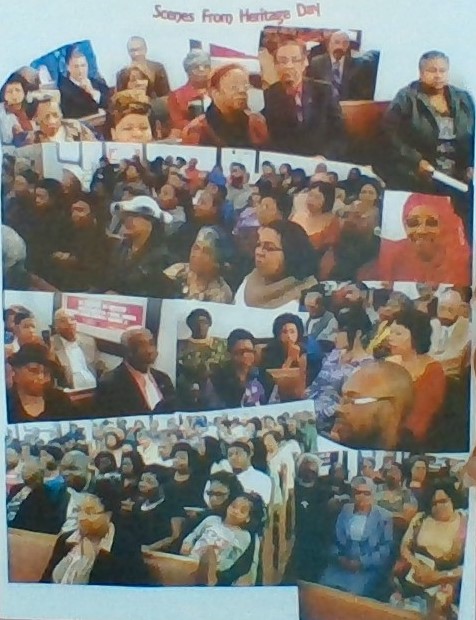
- Heritage Day festivities became one of the largest annual fund-raising activities in Mt. Zion history. The Junior Choir begin to sing on first and third Sundays and they purchased robes.
- Scholarship opportunities were increased to include the Abena Carter Scholarship Fund and the Helping Hand Academic Growth fund (HE.A.G.).
- Breakfast with Pastor and First Lady was instituted, occurring the first Sunday of each year.
- Additional land was purchased to expand the cemetery.
- The church purchased a bus.
A New Century; A Continuation of Growth
Rev. Ernest Webster
The Mt. Zion family wrapped itself in the wonder and opportunity of the 21st century.
Rev. Ernest Webster served as pastor of Mt. Zion from 2003 until 2008. Marvelous things were put in place during his five years as the shepherd. In 2006, the Sharps Number V School was re-dedicated as the Sharps Cultural and Historical Site.
At the site, various youth activities were held which included Memorial Day of Fun -- a day of family, fellowship, and fun with outdoor activities, sports, events, food, and music.
Rev. Melvin Shearin, II
Rev. Melvin Shearin, II served as pastor from 2009 until 2015. Improvements focused equally on overhauling the physical structure of Mt. Zion and uplifting the spirit of the church members.
Renovation projects included:
- Improvements to the church and the parsonage were completed. Installation of new gutters on the church, annex, parsonage, and Sharps Cultural and Historical Site.
- The church entrance was refurnished with ceramic title.
- The driveway to the parsonage and Sharps Cultural and Historical Site were paved.
- The church parking area was repaved.
- A new furnace was installed in the church.
Spiritual growth and service activities involved:
- Workshop/training for the Diaconate, Ushers, and Sunday School teachers were organized and executed.
- Youth Revival Service was reinstated
Rev. Alvin Hill
After Rev. Shearin’s pastoral tenure, Rev. Alvin Hill was called to pastor Mt. Zion. Rev. Hill led the church from 2016 to 2018. Following the two-year pastorate of Rev. Alvin Hill, Mt. Zion was again, without a shepherd – this time for nearly 5 years, from 2018 to 2021.
As before, the church was blessed by the lay leadership of Deacon John M. Heaggans, Sr., Chair of the Deacons ministry and Church Treasurer, who coordinated with local ministers to ensure that the members of Mt. Zion were regularly fed God’s Word. During this period, the pastoral search was temporarily suspended, but Mt. Zion continued to worship by conference call, on a bi-monthly
basis.
In November of 2021, Mount Zion Baptist Church joyfully called The Rev. Dr. Timothy Tee Boddie as the seventeenth pastor, and he was officially installed in April of 2022. Pastor Boddie continues to serve as Pastor today.
Under Pastor Boddie’s leadership, Mt. Zion persists as a beacon of faith, hope, and love in the Northern Neck. Internal growth and community outreach are two important pillars of Mt. Zion. New ministries, auxiliaries, and improvements to ongoing services reflect Pastor Boddie’s leadership and the members’ growing understanding of the teachings of our Lord and Savior Jesus Christ in the Bible.
Among the accomplishments, to date, include:
- Monday Morning Manna, a virtual prayer and meditation discipleship ministry
- Wednesday Virtual Bible Study and Prayer TIme
- Pastor’s Aide Ministry
- Reorganization of the Junior Choir, becoming the Youth Choir
- Launch of the Community Garden Ministry
- Overhaul and upgrade of the Audio-Visual system, including 3 New Viewing Screens
- Installation of security cameras
- Installation of new carpet and pew cushions
- Improvements to the foundation of the parsonage
From its founding in 1866 to the celebration of its 160th year, Mt. Zion has sought to make a difference in the lives of everyone who has come through its doors and of those in the community.
Throughout the years, the members of Mt. Zion have kept before them the Church Covenant, which prefaced the first written records of the church's founding.
The church members of today must continue to voice and demonstrate the sentiments of the 26 founders of Mt. Zion, which is expressed in their favorite hymn, Amazing Grace:
“Through many dangers, toils and snares
I have already come;
‘Twas grace that brought me safe thus far,
And grace will lead me home.”
Rev. George Langhorne
Rev. George Langhorne’s pastorate was for two-years, from 1989 to 1991. He was supported in the pulpit by Mrs. Shirley Fountain who served as the co-pastor.
The brief Langhorne administration was followed by the absence of a pastor at Mt. Zion for two-years. A true blessing to the Church from 1991 through 1993 was Rev. Leon Baylor. He assumed the responsibility of presiding over Sunday services during that time.